
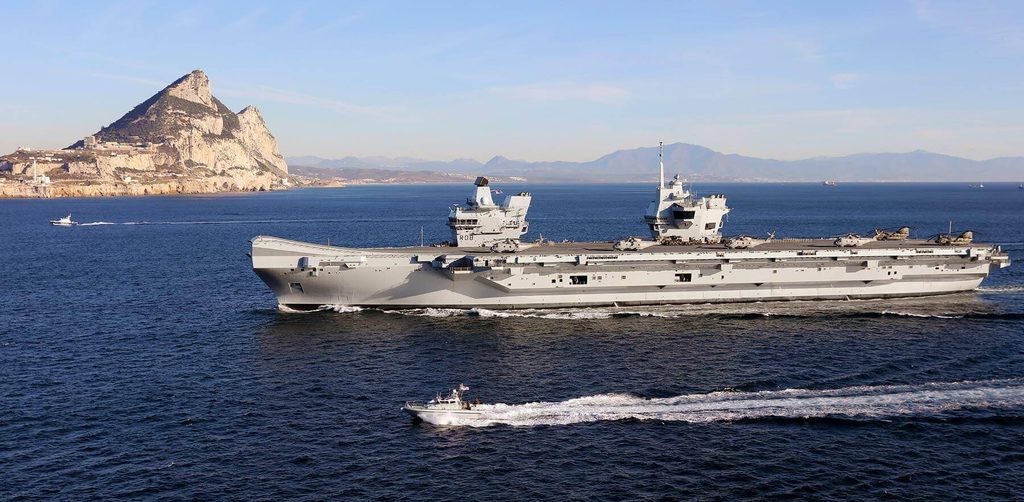
HMS Queen Elizabeth arrived in Gibraltar on Saturday 24 October, bringing one of the Royal Navy’s largest warships to the Rock for a visit combining replenishment, official engagements and a rare opportunity for the public to step aboard.
The 65,000-tonne aircraft carrier arrived with around 800 personnel. Commanded by Captain Claire Thompson, the ship is making a seven-day stop before returning to the Atlantic to continue her operational training programme.
The visit continues an association dating back to February 2018, when Gibraltar was the destination for Queen Elizabeth’s first overseas port call. On that occasion, the newly commissioned carrier stopped for supplies while undertaking helicopter trials off the Iberian Peninsula.
Public access in Gibraltar
A public open day took place on Sunday 25 October, giving ticket holders the chance to visit the carrier and meet members of her crew. Demand was considerable, with the free tickets snapped up shortly after their release.
According to the Gibraltar Chronicle, around 1,000 tickets were allocated within four minutes. The advertised open day has now passed; it was a specially arranged event requiring advance tickets, rather than general access throughout the ship’s stay.
Commander British Forces Gibraltar, Commodore Tim Davey, described the event as an opportunity to strengthen the community’s longstanding relationship with the Royal Navy and introduce visitors to its personnel and capabilities.
Recent deployments and current operations
Queen Elizabeth sailed from Portsmouth on 5 September for her current three-month deployment. Before reaching Gibraltar, she visited Belfast for five days, departing on 12 October after the first visit by a British aircraft carrier to the Northern Irish capital in 61 years.
Her current programme includes serving as the afloat command platform for NATO’s Allied Reaction Force, alongside training involving Chinook helicopters and work with uncrewed and autonomous technologies.
Previous major deployments include her 2023 mission to northern European waters, when she led an international carrier strike group in the North Sea and Norwegian Sea. Embarked F-35B fighters and helicopters practised air defence and strike missions alongside allied warships.
Her first operational deployment in 2021 took the carrier to the Indo-Pacific and back. During that seven-month mission, Queen Elizabeth travelled approximately 49,000 nautical miles, reaching Japan and Guam while operating with international partners.
What happens after Gibraltar
Following the Gibraltar stop, the immediate priority is preparation for operational sea training in November, when the ship and crew will undergo formal assessments of their ability to conduct naval operations.
Training will continue into 2027, including major exercises with NATO allies and partners. The Royal Navy says this programme will prepare Queen Elizabeth to take over from sister ship HMS Prince of Wales as the UK’s high-readiness strike carrier and fleet flagship in late 2027.
The announced plans therefore focus on NATO readiness and the return to carrier strike duties. The Royal Navy’s published programme does not specify a destination for a subsequent long-range operational deployment.