


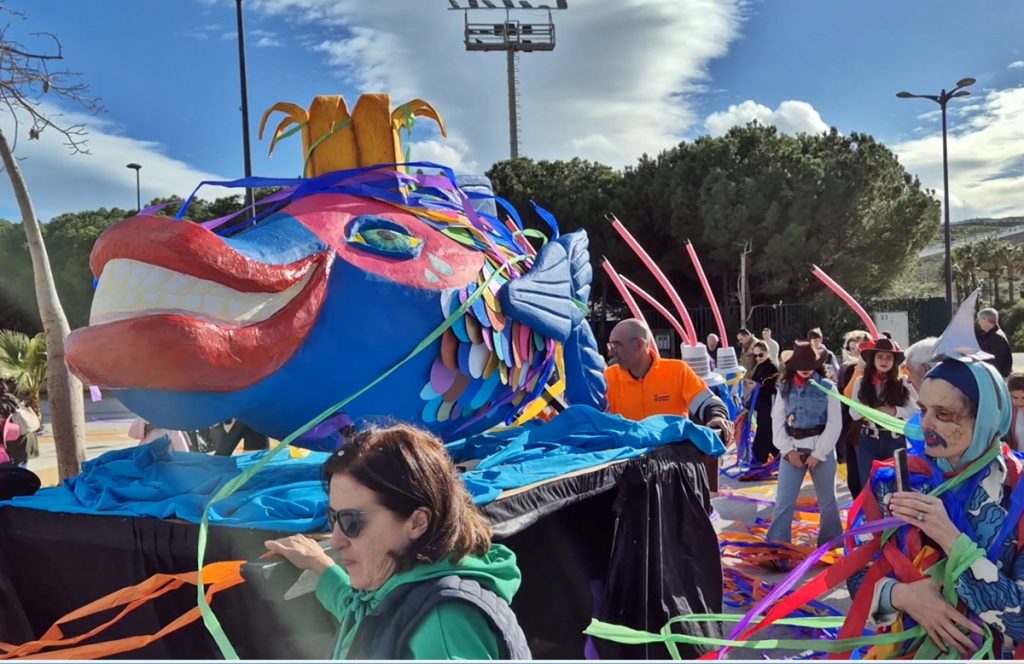
As Carnival draws to a close in Estepona, the mood shifts from glitter and laughter to mock sorrow — because it’s time for the Entierro de la Sardina, the Sardine Funeral.
This wonderfully theatrical tradition marks the official end of Carnival and the beginning of Lent. Its origins go back to 18th-century Spain, often linked to the reign of King Carlos III, when a shipment of spoiled sardines was reportedly buried outside Madrid. What began as an unfortunate incident evolved into satire, and eventually into one of Spain’s most colourful customs.
In Estepona, a giant papier-mâché sardine, called Alicia, is paraded around the Fairground, accompanied by “mourners” dressed in black, dramatic veils, and exaggerated displays of grief. There’s laughter, music, and plenty of playful wailing — because this funeral is anything but solemn.
And then normally comes the finale: the sardine is burned, flames lighting up the night sky in a symbolic farewell to the excess and indulgence of Carnival season, the fire representing cleansing, renewal, and the transition into a more reflective time of year. But don’t be fooled, there’s always a sparkle in the air. Because in Estepona, even saying goodbye is done with style, humour, and a strong sense of community.
Unfortunately this year weather conditions meant the cremation was not possible, but Alicia still had rowdy and colourful send-off.


