


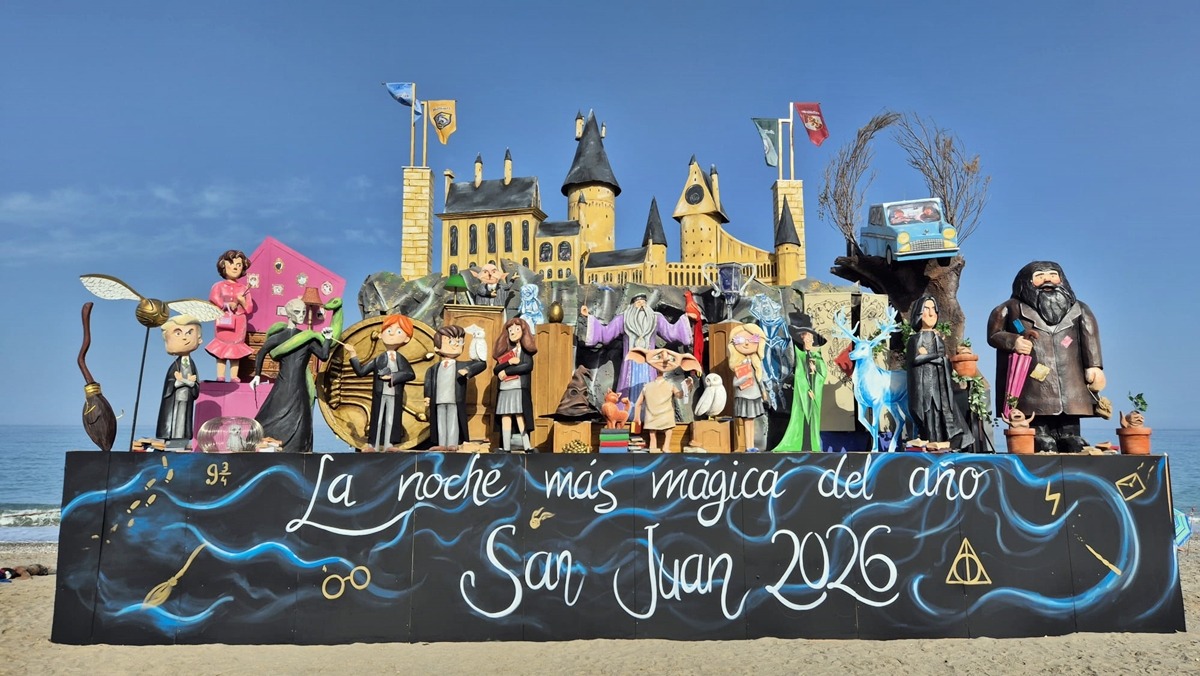
Sabinillas in Manilva is preparing to host one of its most eagerly anticipated annual events—the Noche de San Juan, a celebration that draws thousands to the seafront for a night of bonfires, music, and Mediterranean magic.
Taking place on the evening of Tuesday, 23rd June, the festival marks the arrival of summer with a series of symbolic rituals and public festivities. The highlight of the night will be the burning of the “júa”, a large effigy created by a team of local artists, representing topical themes from the past year. At midnight, the figure will be set alight on the sand in a dramatic ceremony intended to cleanse the past and welcome positive change.
The celebration will begin at 10 pm along the Paseo Marítimo, where crowds can enjoy music from local DJs and live performances from DJ Alba Dreid and La Tentación Group.
In addition to the bonfire, which is lit at midnight, there is a spectacular firework display, and the festival is also known for its traditional midnight dip, where revellers enter the sea—many jumping over waves three times—believed to bring good luck and spiritual renewal.
Access to the event is free, and visitors are advised to arrive early to secure a good spot on the beach. Local restaurants and bars will remain open late to accommodate the influx of guests.
The San Juan celebration in Sabinillas continues to grow in popularity each year, offering a unique combination of culture, festivity, and seaside charm that captures the spirit of summer on the Costa del Sol.
Tips for enjoying San Juan in Sabinillas
San Juan is always a fantastic evening, but a little planning can make it even more enjoyable.
Parking near the beach becomes almost impossible after 10 pm, as much of the centre of Sabinillas is closed to traffic. It’s best to park on the opposite side of the main road and walk in.
When the bonfires are lit, the heat can become intense and crowds tend to move quickly away from the flames. Walking further along the beach is usually easier than trying to get onto the Paseo.
If you’re bringing young children, it’s a good idea to write your phone number on their arm in case you become separated in the crowds.
And finally, as with any busy event, keep an eye on personal belongings and be aware of pickpockets.
Most importantly — enjoy the night!
The origins of San Juan celebrations in southern Spain
The Noche de San Juan is one of southern Spain’s most atmospheric celebrations, bringing thousands of people to the beaches on the night of 23rd June. Although now associated with Saint John the Baptist, its origins are widely believed to lie in much older midsummer customs.
Long before Christianity, communities across Europe marked the summer solstice with fires intended to celebrate the sun, protect against misfortune and symbolically cleanse away the past. As Christianity spread, these traditions became linked to the feast of Saint John the Baptist on 24th June, creating the combination of religious, seasonal and folkloric customs celebrated today.
In coastal Andalucía, fire and water remain at the heart of the festivities. Bonfires are lit on the sand, while effigies known locally as “júas” are burned to represent leaving behind the troubles of the previous year. People traditionally write wishes or unwanted memories on pieces of paper and throw them into the flames.
At midnight, many revellers enter the sea or jump over the waves, a ritual believed to bring purification, renewal and good luck. Music, food, fireworks and gatherings of friends and families have gradually transformed these ancient customs into one of the biggest beach celebrations of the Andalusian summer.
Today’s Noche de San Juan may be a lively public festival, but its enduring appeal comes from something much older: the human desire to celebrate light, welcome a new season and begin again.
What’s on Guide
For more information about local events visit the Manilva Life What’s on Guide
Manilva Life on Social Media
We also publish events, as they are announced on our Social Media pages at: Facebook, Instagram, and Youtube


