
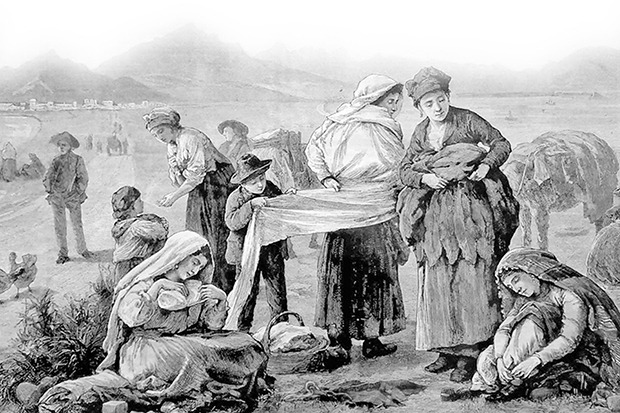
Casares will honour the courage and resilience of its post-war women with the ninth Ruta de las Recoveras, taking place on Friday 23 and Saturday 24 October 2026.
The annual event recalls the women who walked around 50 kilometres from Casares towards La Línea and the Gibraltar frontier, carrying eggs and other agricultural produce that they could sell or exchange for scarce goods. More than a commemorative hike, the route preserves an important chapter of local working-class and women’s history.
Women walking for survival
In the difficult years following the Spanish Civil War, many Casares families had lost their main source of income. Some of the women who became recoveras were widows of Republicans, while others were married to men who had been imprisoned, killed or otherwise affected by the repression.
With children and relatives depending on them, these women found ways to earn a living through the informal trade known as la recova.
They left Casares carrying baskets of eggs, poultry, cured meat and other produce from the countryside. After making the long journey towards La Línea, the goods could be sold or exchanged for products arriving through Gibraltar that were scarce or expensive in post-war Spain.
These included coffee, sugar, chocolate, butter, tobacco, soap, clothing and, on occasions, medicines such as penicillin. The return journey was particularly punishing, taking the women uphill and back across the countryside with their purchases carefully concealed.
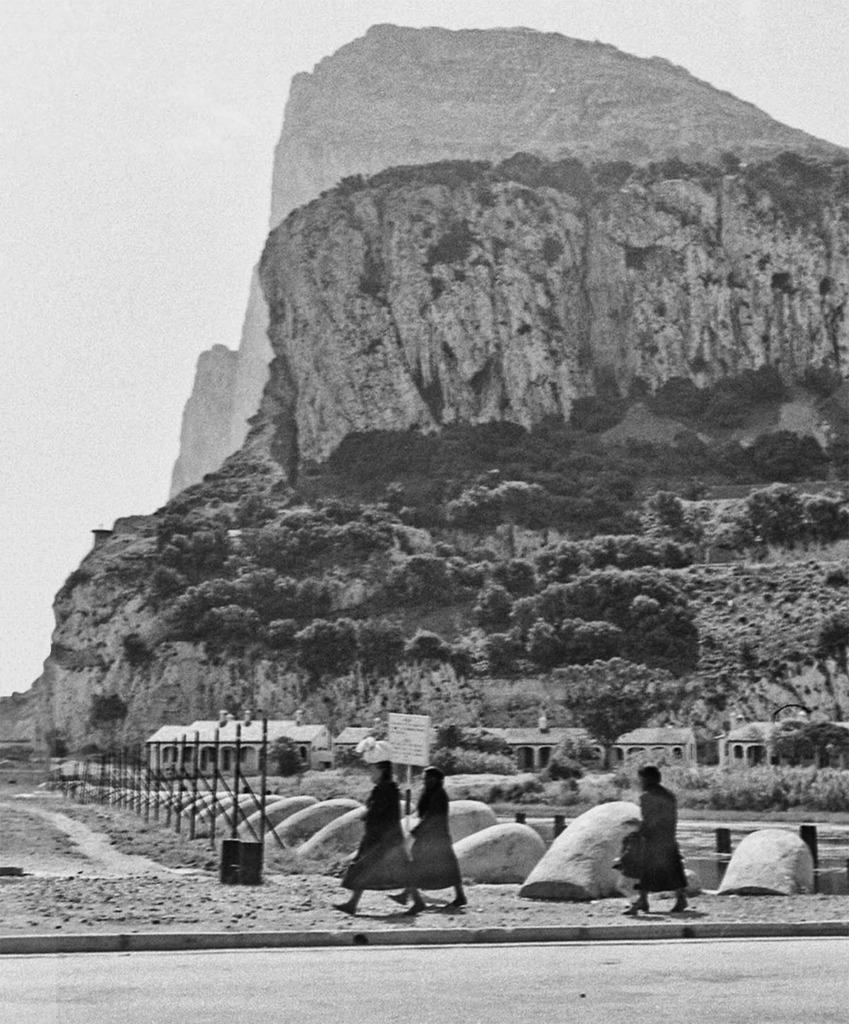
The official Casares tourism account notes that most of those making the journey were women, although some men also took part. The historic route passed through areas including the Guadiaro valley, the Alcornocales, El Toril and Pinar del Rey before reaching La Línea and the Gibraltar frontier.
Recoveras and matuteras
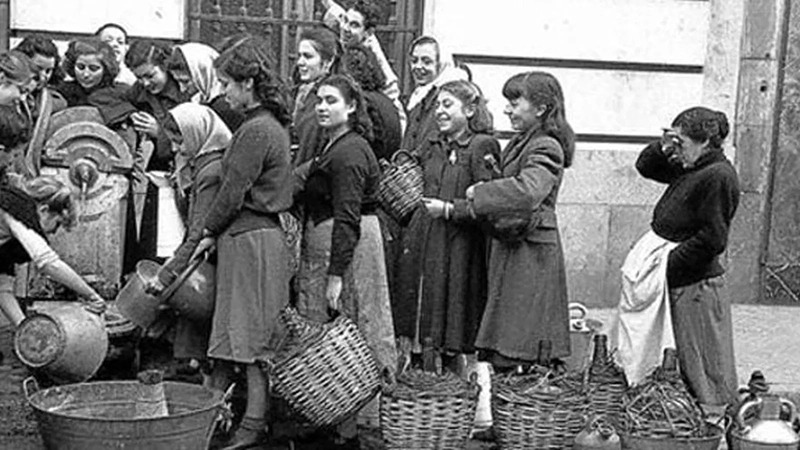
The name recovera traditionally referred to a woman who bought and sold eggs and other farm produce. In Casares, it became associated with those who used this trade to support their families during the years of hunger and shortages.
Across the Campo de Gibraltar, women involved in similar cross-border trade were also known as matuteras. Their work was risky as well as physically exhausting. Goods were sometimes hidden beneath clothing or placed in secret pockets to avoid confiscation.
The women could face searches, penalties and social stigma. Their activities were often dismissed simply as smuggling, obscuring the poverty, hunger and lack of alternatives that drove them to undertake such journeys.
They usually travelled together, offering protection and practical support during the many hours spent walking through isolated countryside.
Remembering Gertrudis
One of the best-known stories is that of Gertrudis, whose husband, a Republican carabinero, was detained and executed after the Civil War.
Gertrudis had previously fled Málaga with her young children during La Desbandá, the mass flight along the Málaga–Almería road in February 1937. After returning to Casares, she became a recovera to provide for her family.
Her granddaughter, retired teacher Ana Mora, later helped bring the recoveras’ experiences into the public record. Gertrudis’s life inspired Mujeres de ojos grandes and the illustrated story Gertrudis, la recovera, produced with artist Luis Pernía Ibáñez.
Memories shared by families also helped cartographer Manuel Galán reconstruct the route between Casares and the Gibraltar area.
From family memory to an annual route
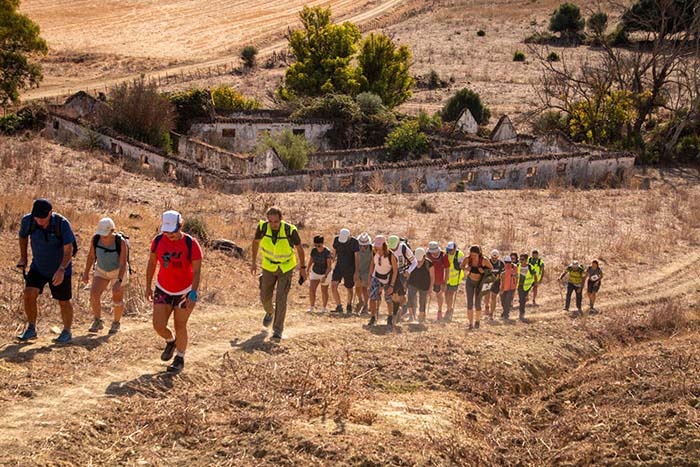
The first organised Ruta de las Recoveras took place in 2017 with the support of Casares Town Hall and the Asociación Andaluza por la Solidaridad y la Paz.
Since then, the initiative has developed into an annual act of remembrance involving residents, walkers and descendants of the original recoveras. Educational activities have also introduced local schoolchildren to a story that, for many years, received little public recognition.
The route now celebrates values that its organisers describe as dignity, resistance and solidarity, while recognising the central role played by women in keeping their families and communities alive.
The 2026 programme
This year’s programme begins at the Casares Cultural Centre on Friday 23 October.
Participants will be welcomed at 5.30 pm before a gathering at 6 pm bringing together relatives of the recoveras of Casares and the matuteras of Jimena de la Frontera. The meeting will allow descendants to share family stories and explore the common history linking the inland villages with Gibraltar.
Walkers will meet again at the Cultural Centre at 5.30 am on Saturday 24 October, with the full route beginning at 6 am.
Four participation options are available:
- The first stage covers approximately 12 kilometres and is expected to finish at around 9 am.
- The second covers approximately 23 kilometres, finishing at around midday.
- The third covers approximately 32 kilometres, finishing at around 3 pm.
- The complete route covers approximately 50 kilometres and is expected to reach La Línea at around 8 pm.
A return bus from La Línea is provisionally scheduled for approximately 8.30 pm. Timings may vary according to walking conditions and the pace of the group.
Registration details
Participation is free, but places are limited to 100 people. Registration closes on Thursday 22 October or earlier if all places are filled.
Entries can be made at the Casa Natal de Blas Infante, by calling 600 413 121 or by emailing turismo@casares.es.
Participants must indicate whether they intend to complete the entire route or one of its shorter sections. The organisers advise walkers to wear suitable footwear and clothing and to carry sufficient water, food and any medication they may need.
Full details and the registration form are available HERE